Everyone wants to go to Cyprus. It is always full of tourists, in any season. And I’m not surprised. It’s an awesome place to spend your vacations, especially considering the weather, landscapes, beaches and delicious food. Some people prefer to spend a lazy day on a beach, another ones come for a crazy nightlife parties in Ayia Napa. But there are others, like me, who prefer to combine relaxation with sightseeing. Of course, in any part of the island there are plenty of places to visit, but if you really want to go deep into history, then Paphos is your destination. 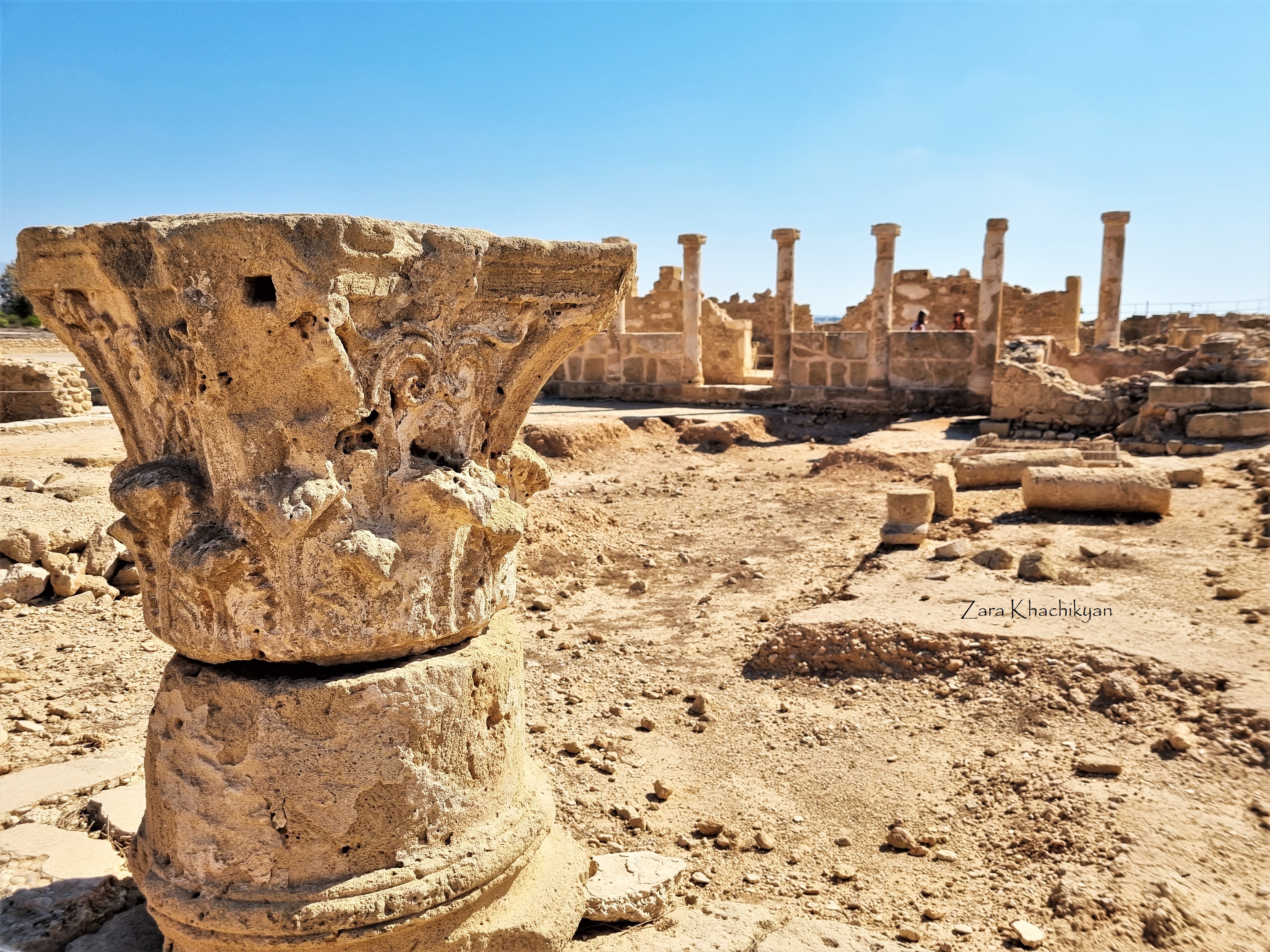
Here in Paphos there are several nice beaches, where you can enjoy blue transparent waters of Mediterranean Sea. But except them there are several Archaeological parks too, which are a must visit mind-blowing places. I’m going to share my experience here for you, so you know which are they, where are they located, which are their entrance fees, etc. This can be a great source for your next trip planning in Paphos. So let’s go.
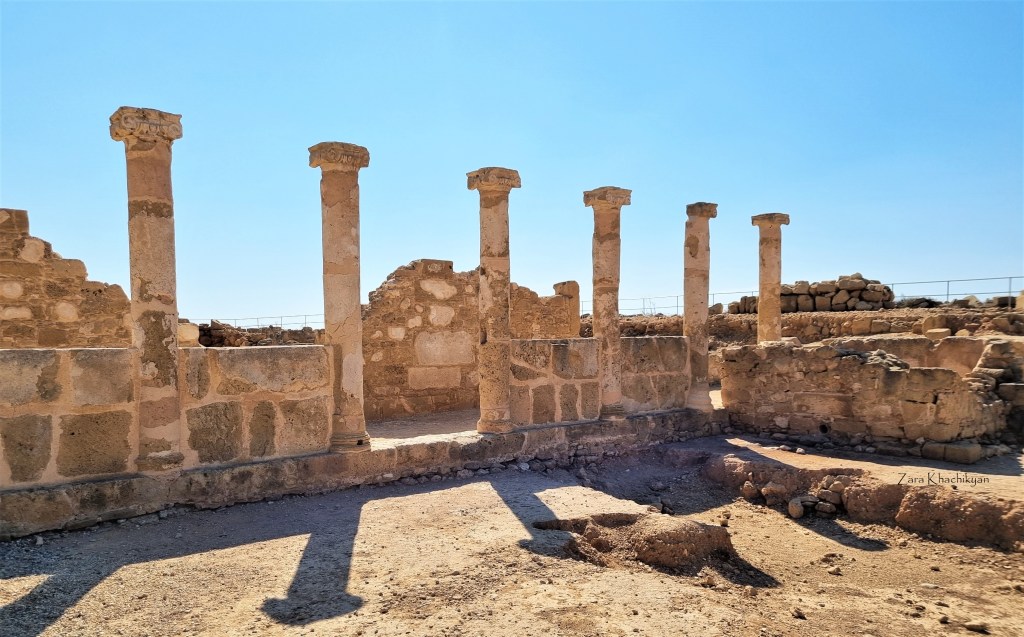
In Paphos we chose a hotel, which was located in Old Town, close to the last bus stop of Intercity Bus, called Old Pervola (Market). The hotel called Panklitos Apartments (by the way, much recommended!), was also close to the best beach in the city, to Venus beach, as well as to one of the main visited archaeological sites, The Tombs of the Kings. This was a great way to start our sightseeing from this place, as it was only few minutes walking distance from our hotel. 
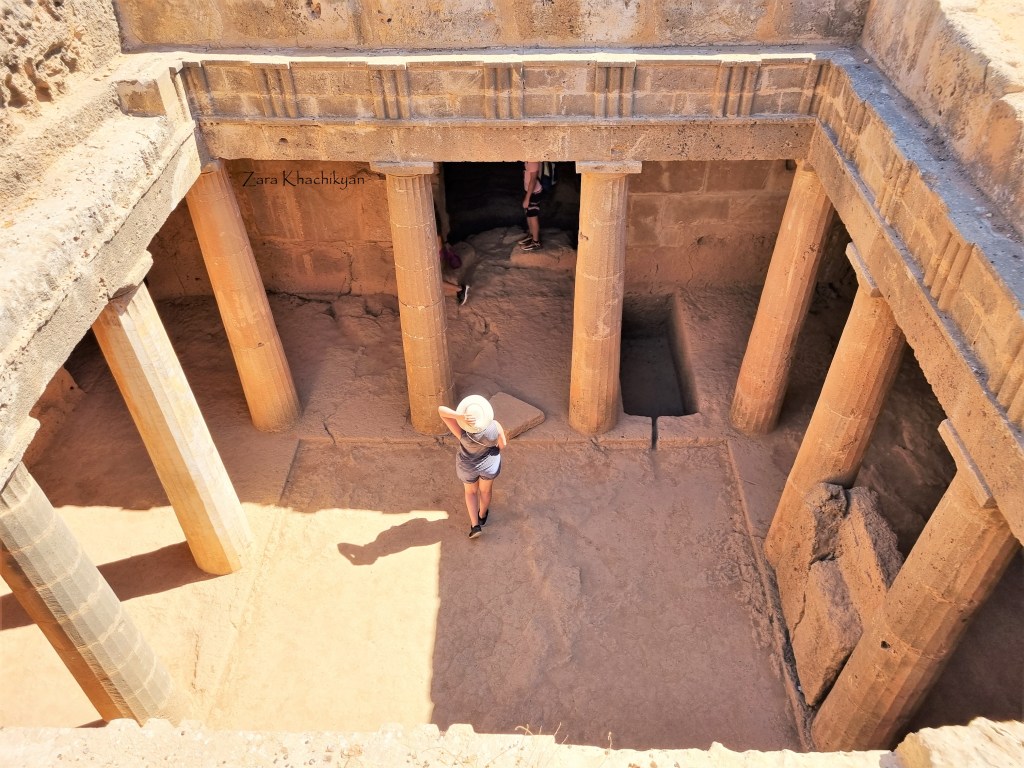
The Tomb of Kings is not just a cemetery. This is a large necropolis dating back to 3th century BC during the Hellenistic period. Here all underground tombs were carved in the rocks. Funny fact is that it’s called The Tomb of the Kings, but no any king was buried here, as the royal institution was abolished in 312 B.C. This was the place where the higher administrative officers and distinguished Ptolemaic personalities as well as the members of their families were buried. The necropolis with its impressive burial monuments was continuously used as a burial area during the Hellenistic and Roman periods (3rd century B.C.-beginning of 4th century A.D.). Some of the tombs feature Doric columns and frescoed walls. The area is quite huge, where the excavation works are still ongoing in some places. It will take around 2 hours to walk around all the site and visit all monuments. Take in mind, it’s an open space and sun is really burning. We were here in the end of September, around 10-11am, and it was already burning.. So my advise, don’t forget to use a lot of sunscreen or come here in not very sunny/hot time (if that’s possible).
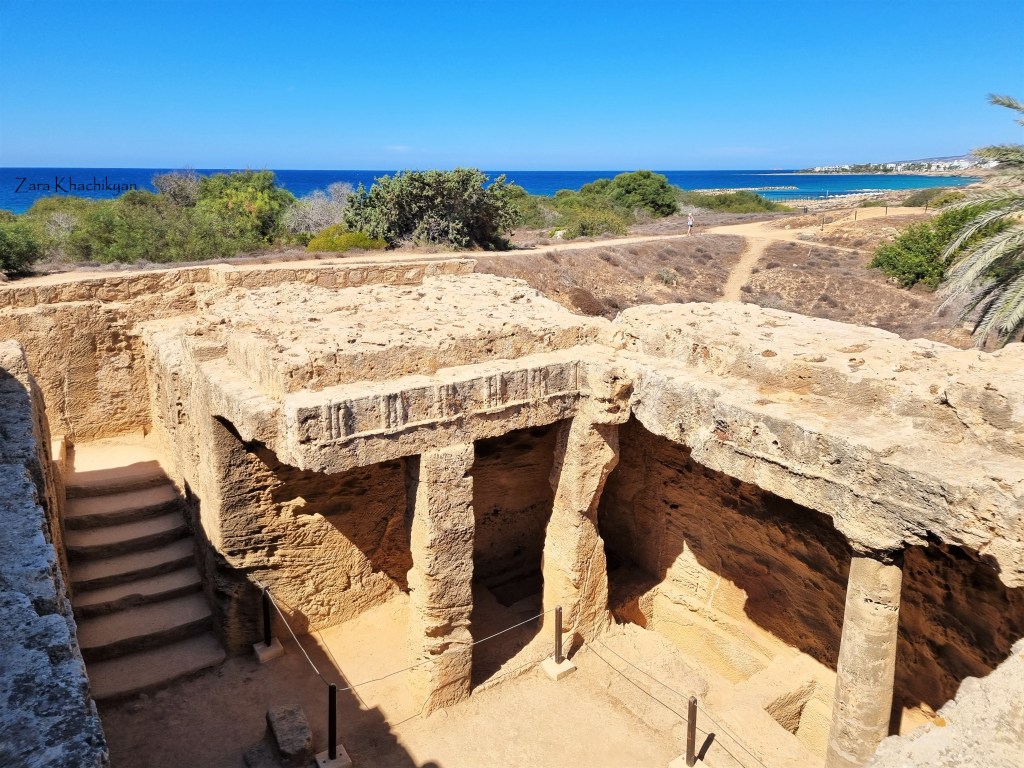
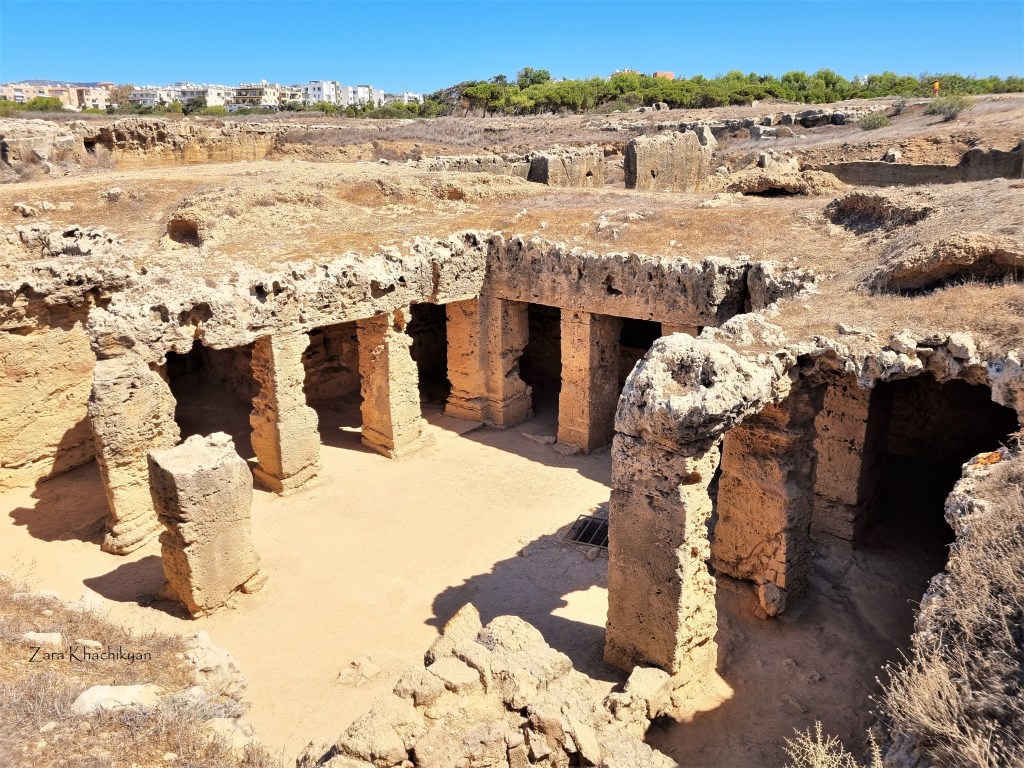
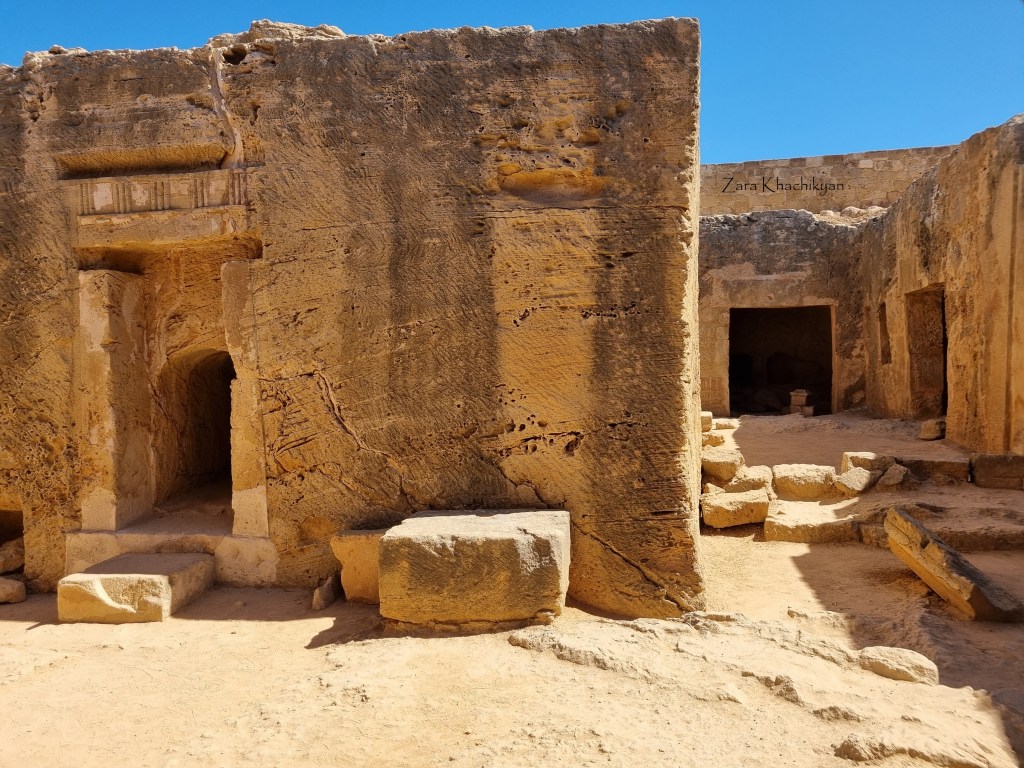
Admission fee 2.50 eur per person (free for children up to the age of 14)
Winter hours (16/9 – 15/4 ) Monday – Sunday: 8.30 – 17.00
Summer hours (16/4 – 15/9) Monday – Sunday: 8.30 – 19.30 (last ticket issued at 19.00)
Catacombs. This is another place that Google will show you in the list of Places to go. Actually there are several catacombs in Paphos, on the way to the harbor, but the one called Agia Solomoni Catacombs is the most mysterious. A legend says that Agia Solomoni and her 7 sons were among the first people on Cyprus to embrace Christianity. They rejected the idolatry which offended many of the beliefs of the Hellenistic period (166 BC). Solomoni with her 7 sons fled from Antiochus and took and refuge in these catacombs. Romans were also not happy with this and finally they found the Jewish martyr in this cave where she was forced to watch her seven sons being tortured and killed by Antiochus IV Epiphanes for refusing to eat pork. Solomoni was spared and her sons were buried in this catacombs and now the main room is called the Grotto of the Seven Sleepers. Here in this catacombs an underground early Christian church has also been preserved where you can see an ancient frescoes on the walls. Since medieval times this place is considered sacred. Some people say that in one of the grottos the holy spring still beats, but we didn’t find it.. Maybe it was in one of the grottos, which were closed for entry? Who knows.. However a terrifying story of Agia Solomoni left a mysterious place, which you can visit today. The entrance is open for all, without any admission fee.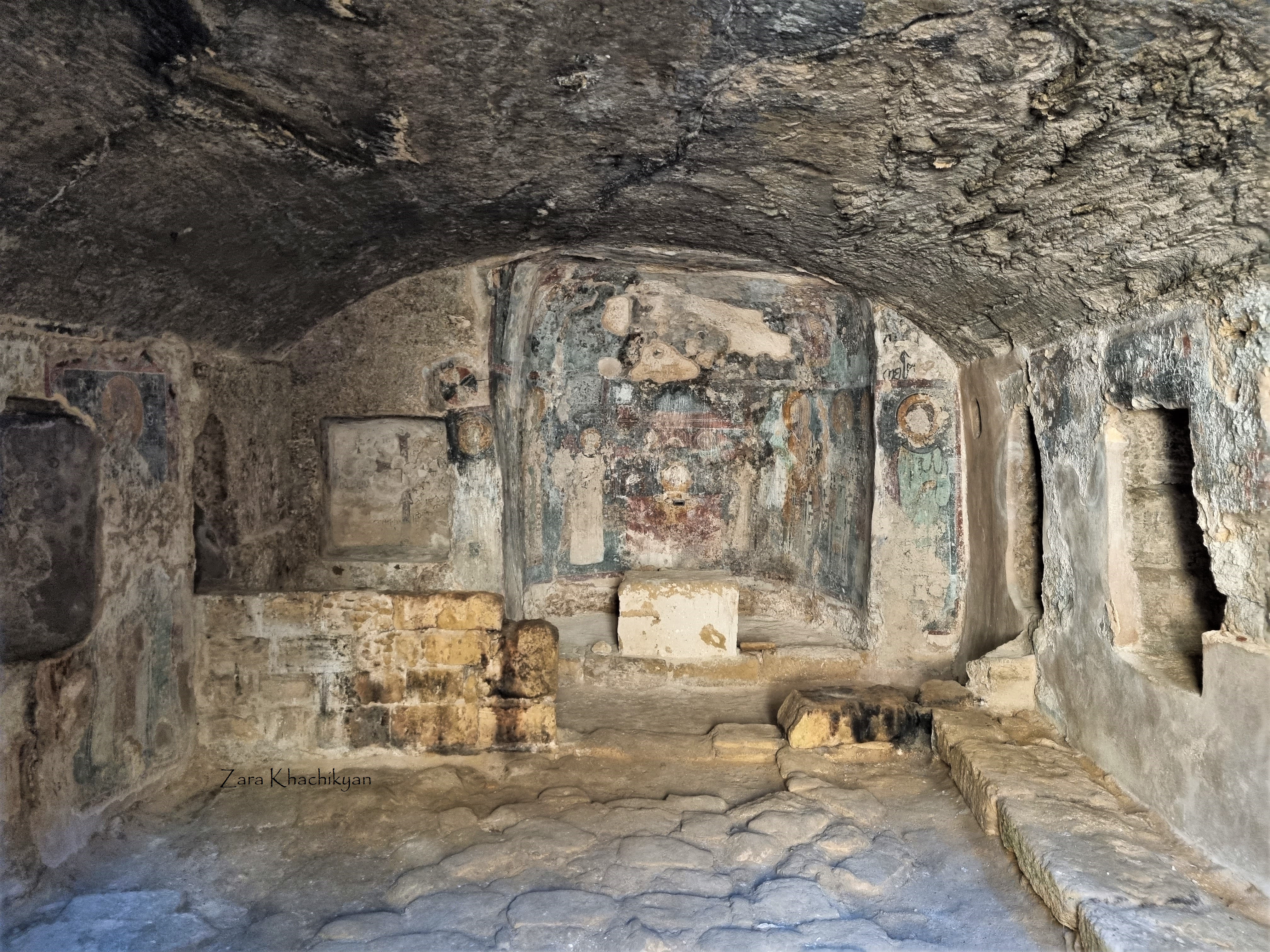
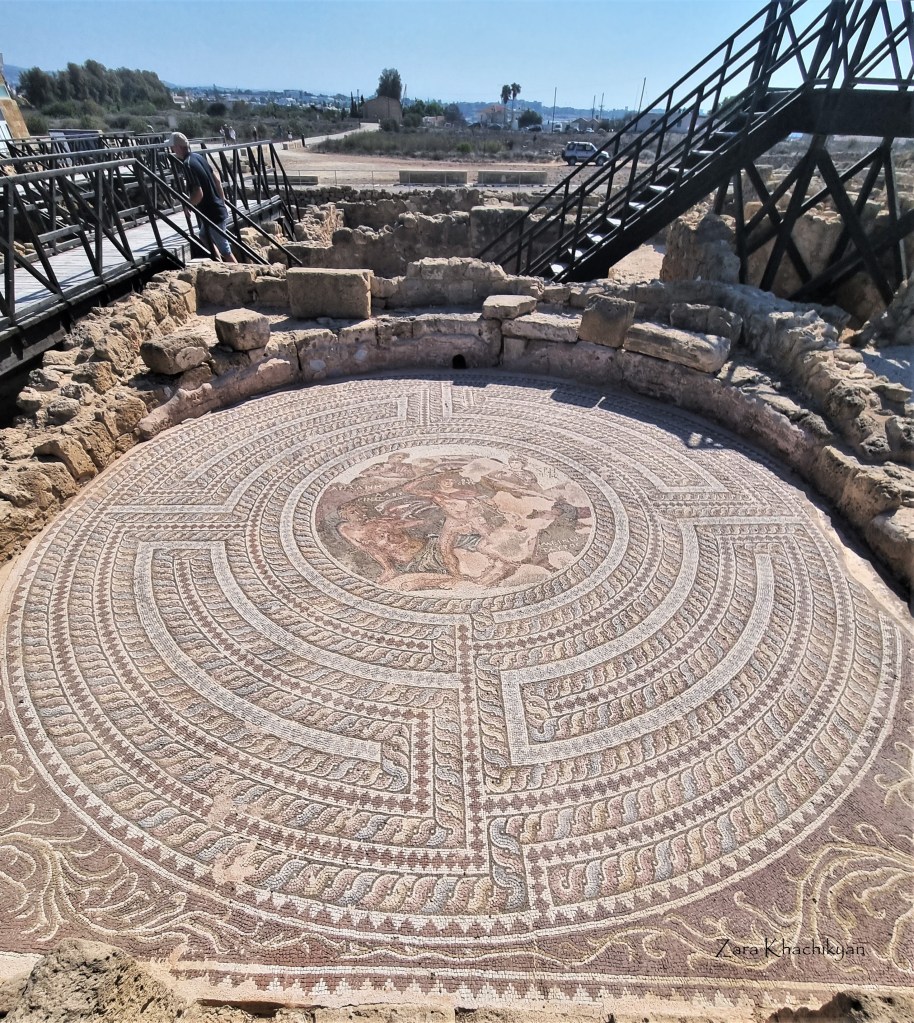
Next place I want to tell you about is famous with its extraordinary mosaics. This is Nea Paphos archaeological site, which is probably the biggest archaeological area in the city. It’s located in the Old Town (of course), just next to the Paphos harbor. It’s easy reachable by foot or by public transport. It’s much huger that The Tomb of the Kings.. so bare in mind to spend some hours inside the area, as each step must be passed and checked carefully not to miss any gem of history, mythology and art. Yes, yes.. you will meet steps of all the Greek mythological heroes here. And the first one you will see once you enter the area is The House of Theseus. I bet you know him and the story of high fight with Minotaur, right? The house is dating back to 2nd-6th century A.D. and according to excavators, this was the official seat of the proconsul, the Roman governor of Cyprus. The house had several rooms, each of them had mosaic decorations on the floor. And the best survived mosaic shows the Minotaur with Theseus, others show Poseidon and Amphitrite, another one had a scene of the birth of Achilles.
Another interesting area shows The house of Orpheus, which is also a luxury building (2nd-3rd century A.D.) with several rooms. Floors in each room were decorated with colorful mosaics. Today only small part of them has been excavated. The largest and most important mosaic panel depicts Orpheus playing his lyre and surrounded with beasts. Other mosaics show Hercules and the Nemea lion along with an Amazonian and a horse.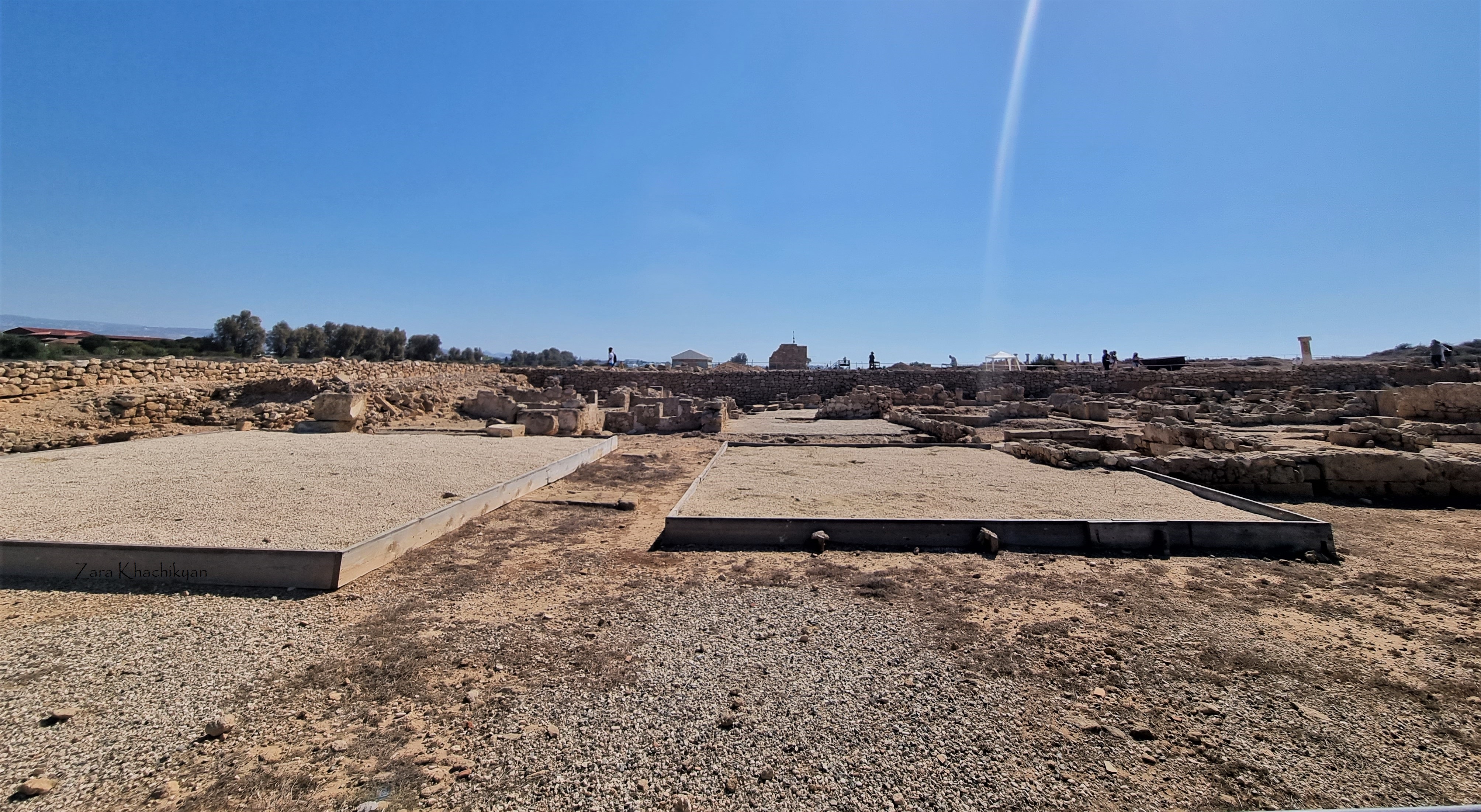
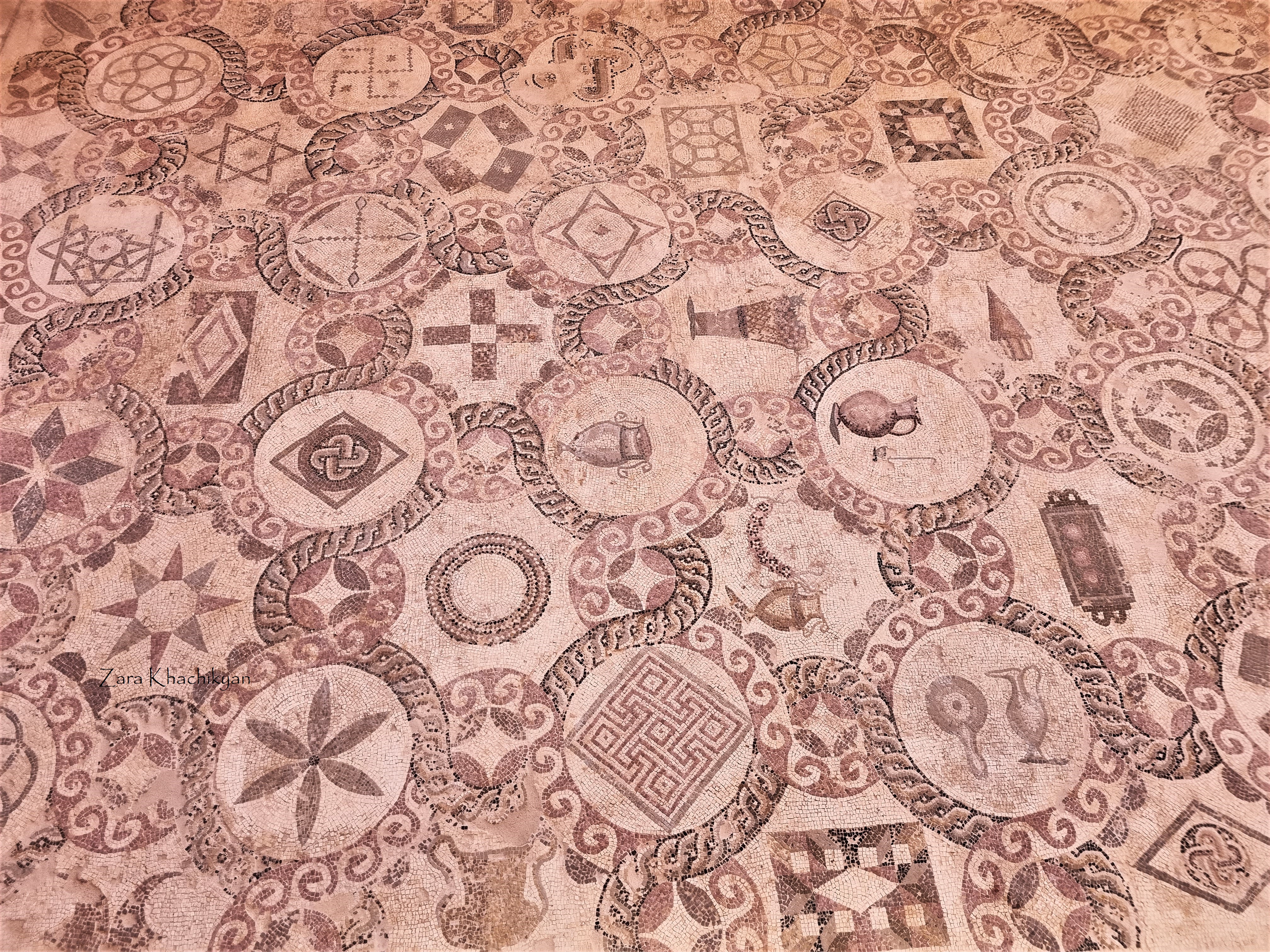
Our next stop has probably the most astonishing mosaics in whole archaeological park. This is The house of Dionysus, the largest villa with breathtaking rooms dating back to 4th-2nd century A.D. Once you see a place looking like a modern house (with walls and roof), you are here. This was the first house with mosaics discovered in Paphos. It has about forty rooms where floors are all covered with mosaics showing different scenes or geometric motifs and objects of everyday life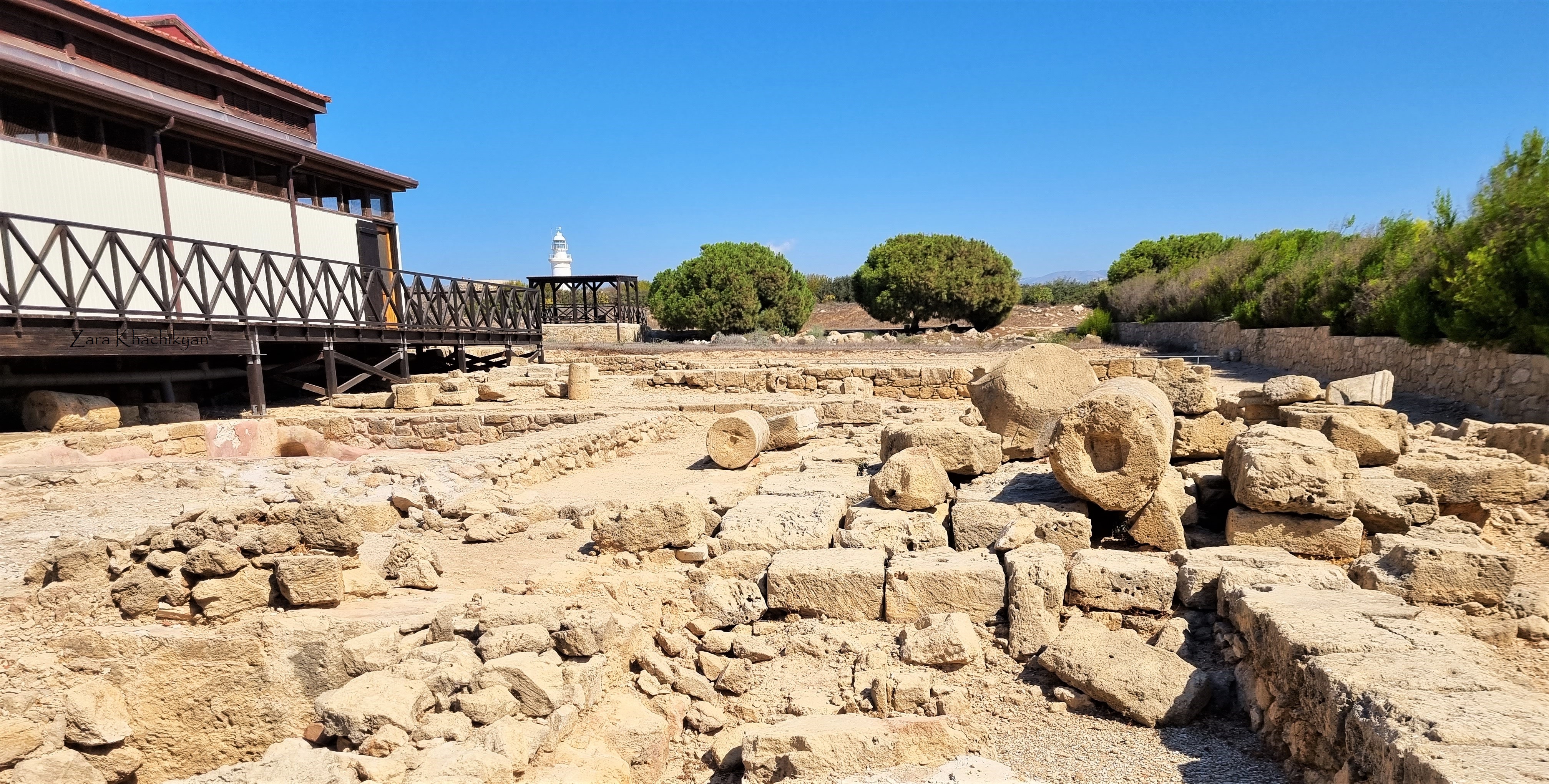
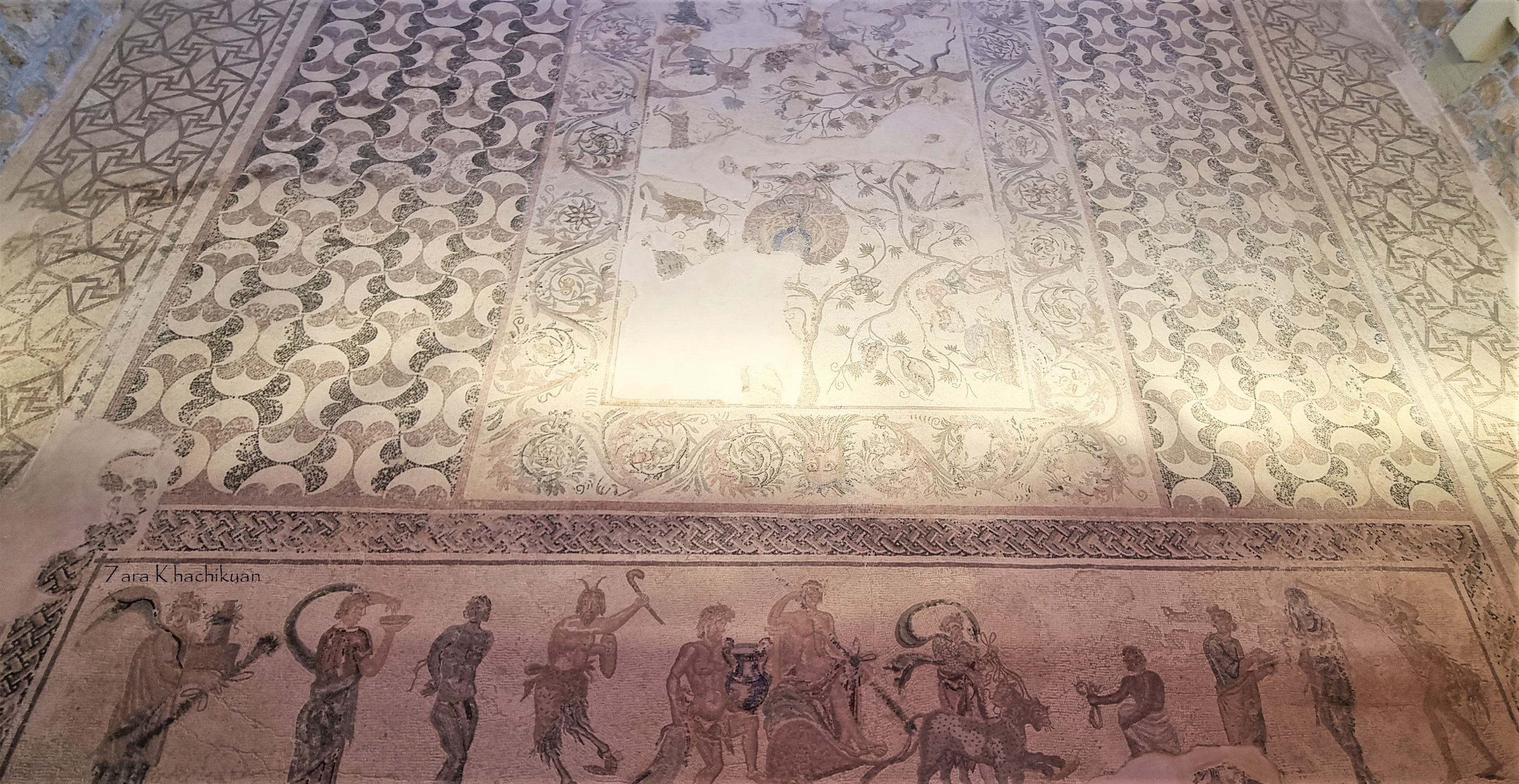
Dionysus was a nature god of fruitfulness and vegetation, especially known as a god of wine and ecstasy, so his villa is full of mosaics depicting scenes of hunting, dining, partying… One of the largest rooms is called “The Triumph of Dionysus”, which was used as a dining room. The mosaics here show the triumph of Dionysus where he’s being crowned with ivy leaves after his return from India.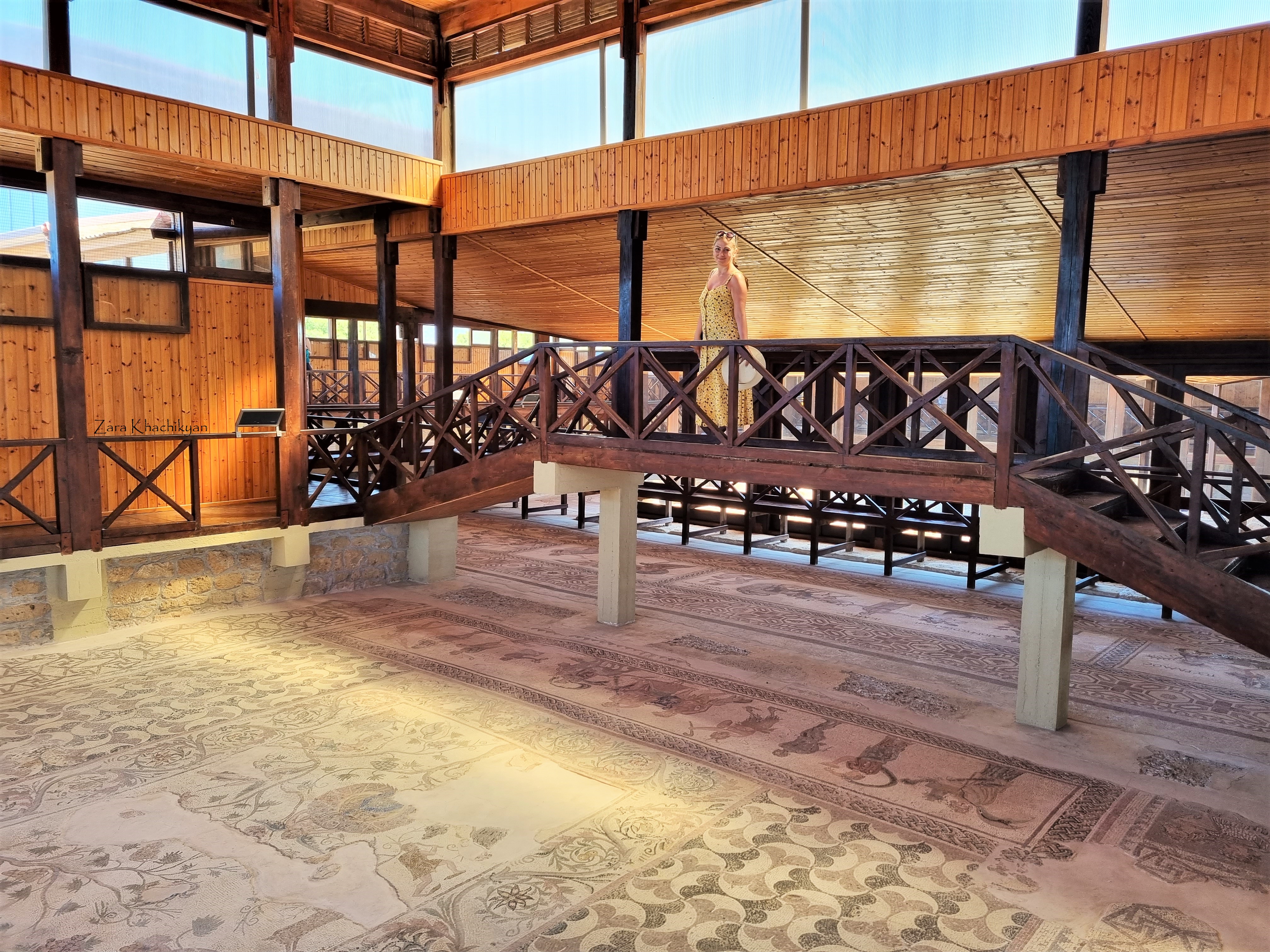
Also here you can see the oldest mosaics found in Paphos, which represents Scylla, the mythical sea-monster who is part-woman, part-fish and part-dog. With a body of woman, there are 3 barking dogs on her forepart and a long tail of a fish. You can clearly see Scylla holding a trident in the right, and the mast of a ship across her body. This pebble mosaic floor is dating back to the Hellenistic period, late 4th – early 3rd century A.D.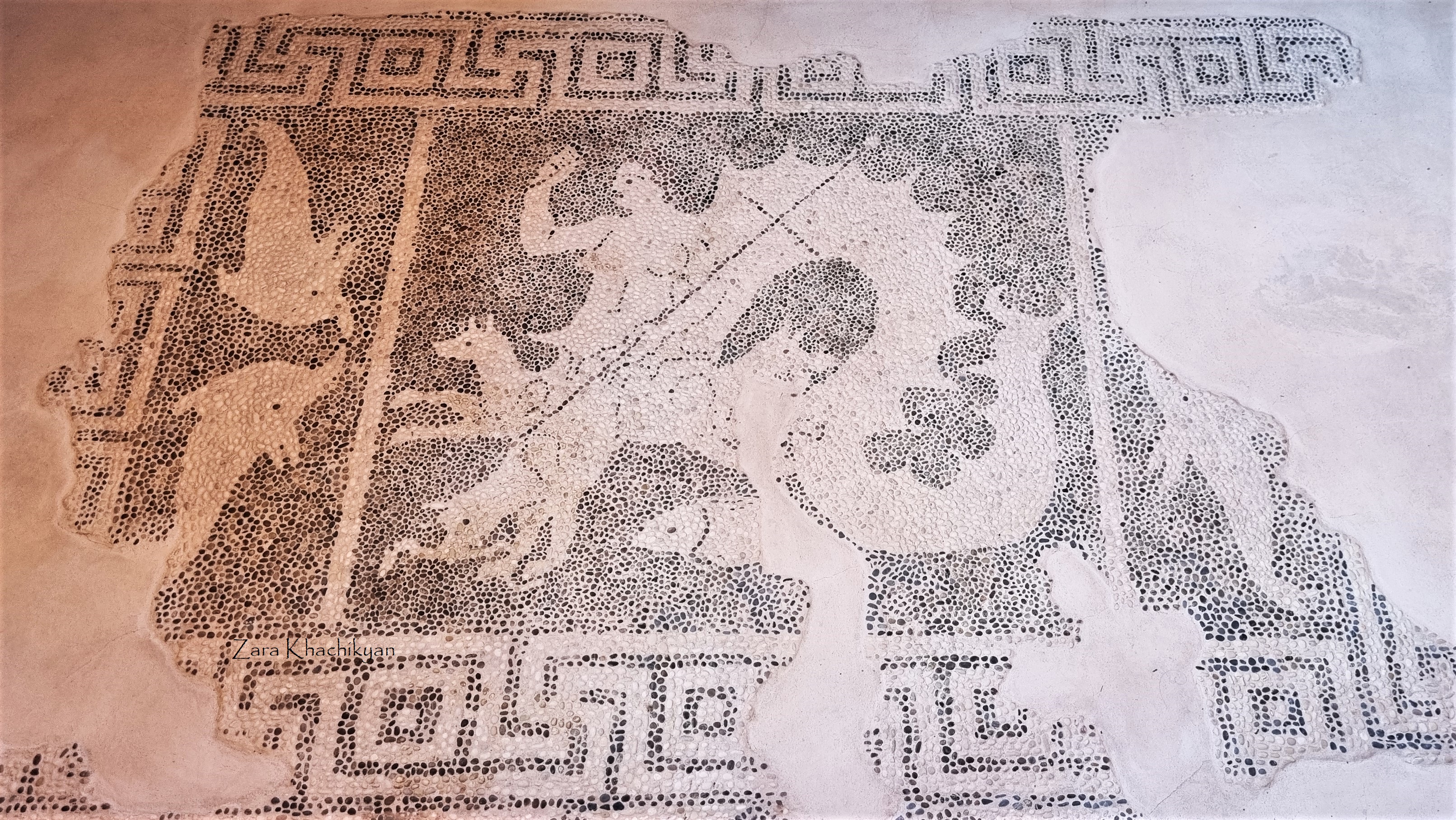
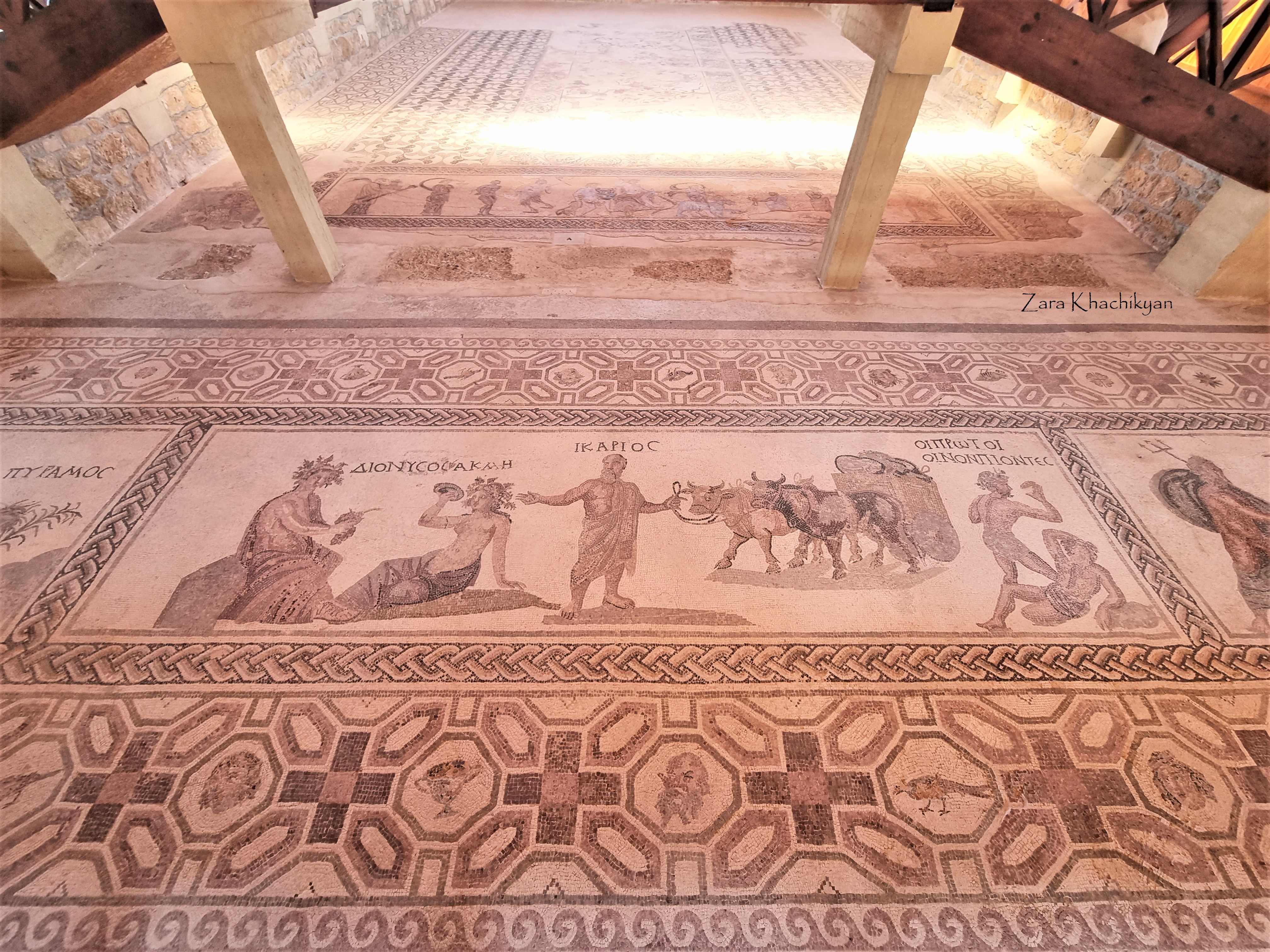
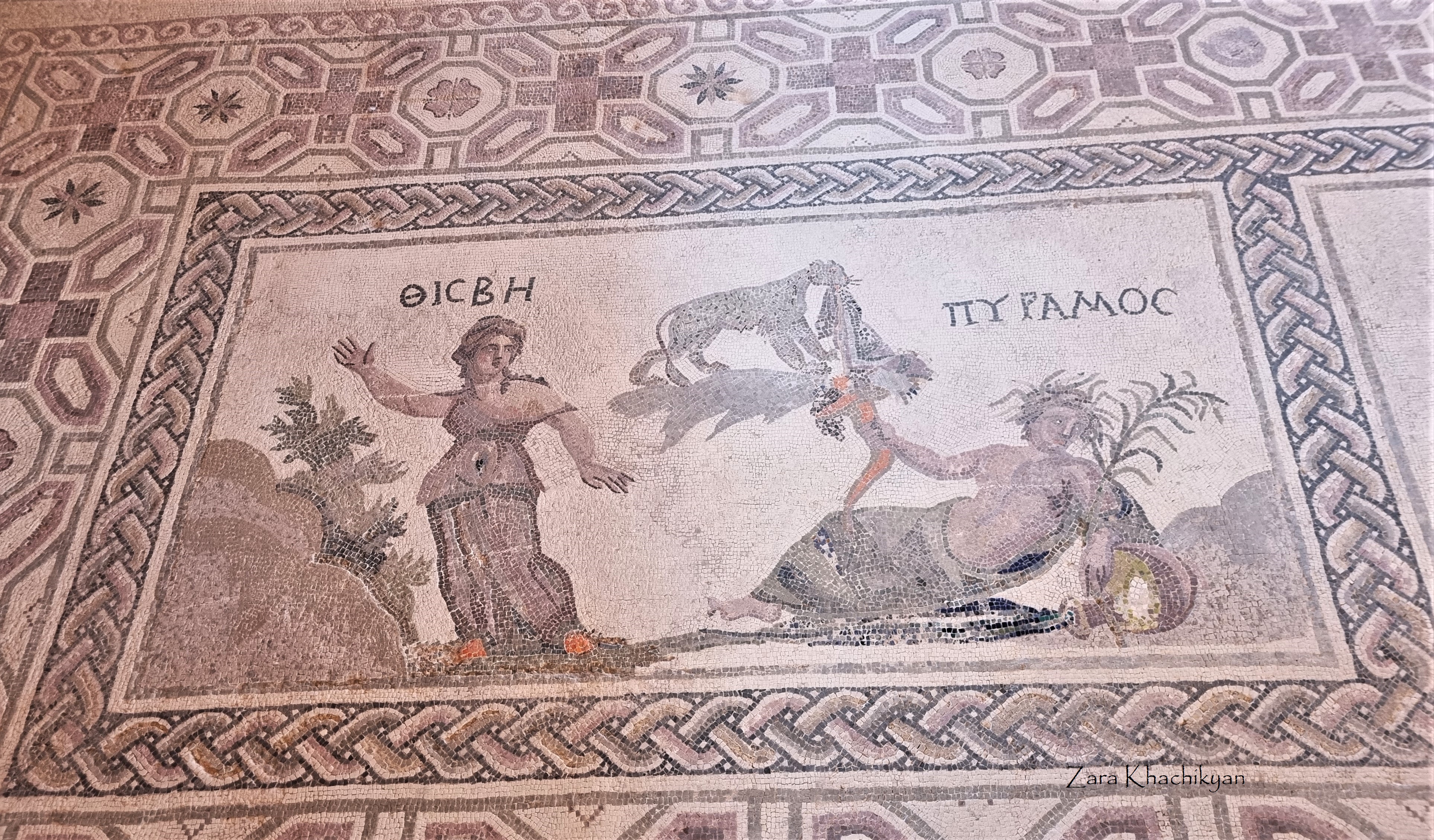
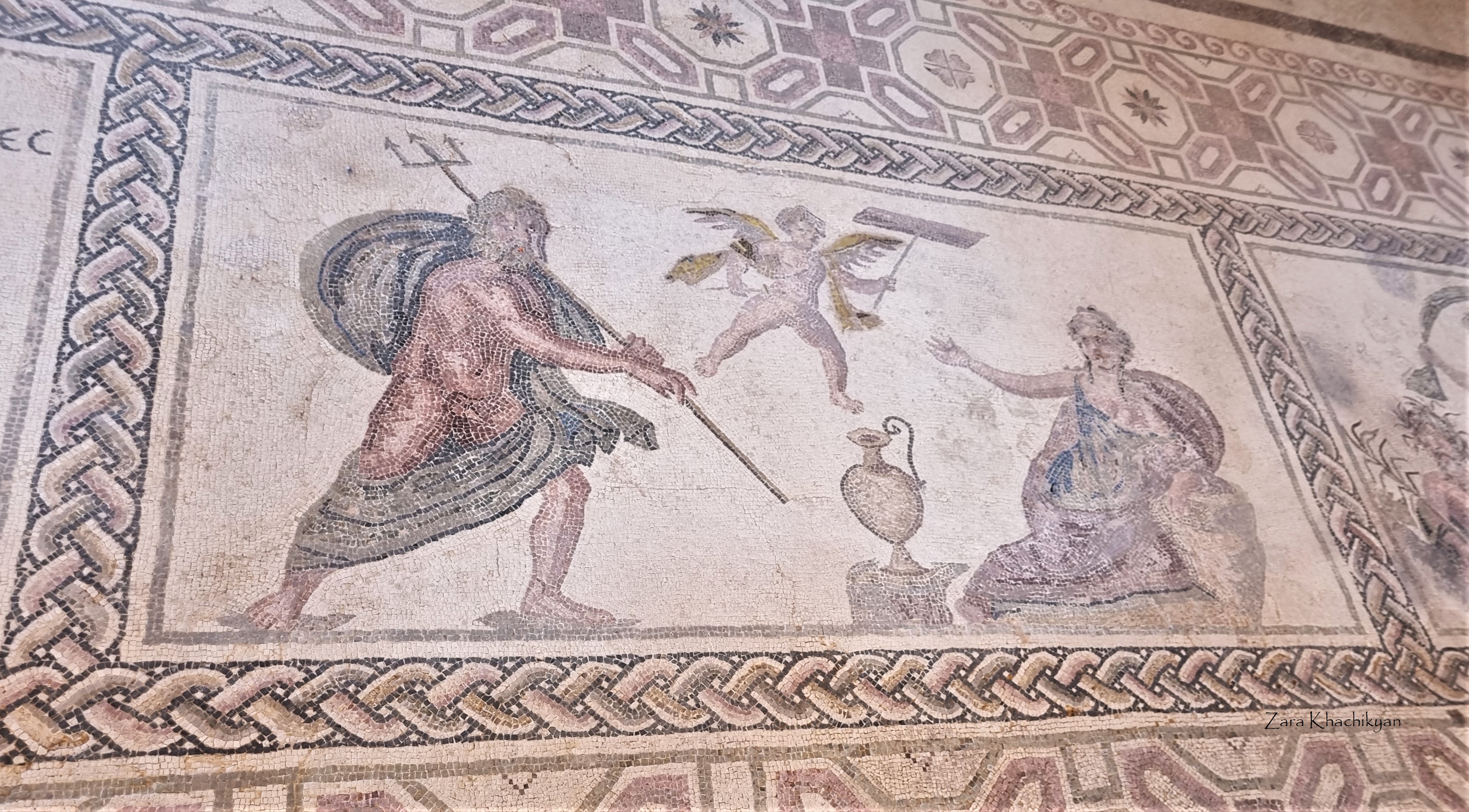
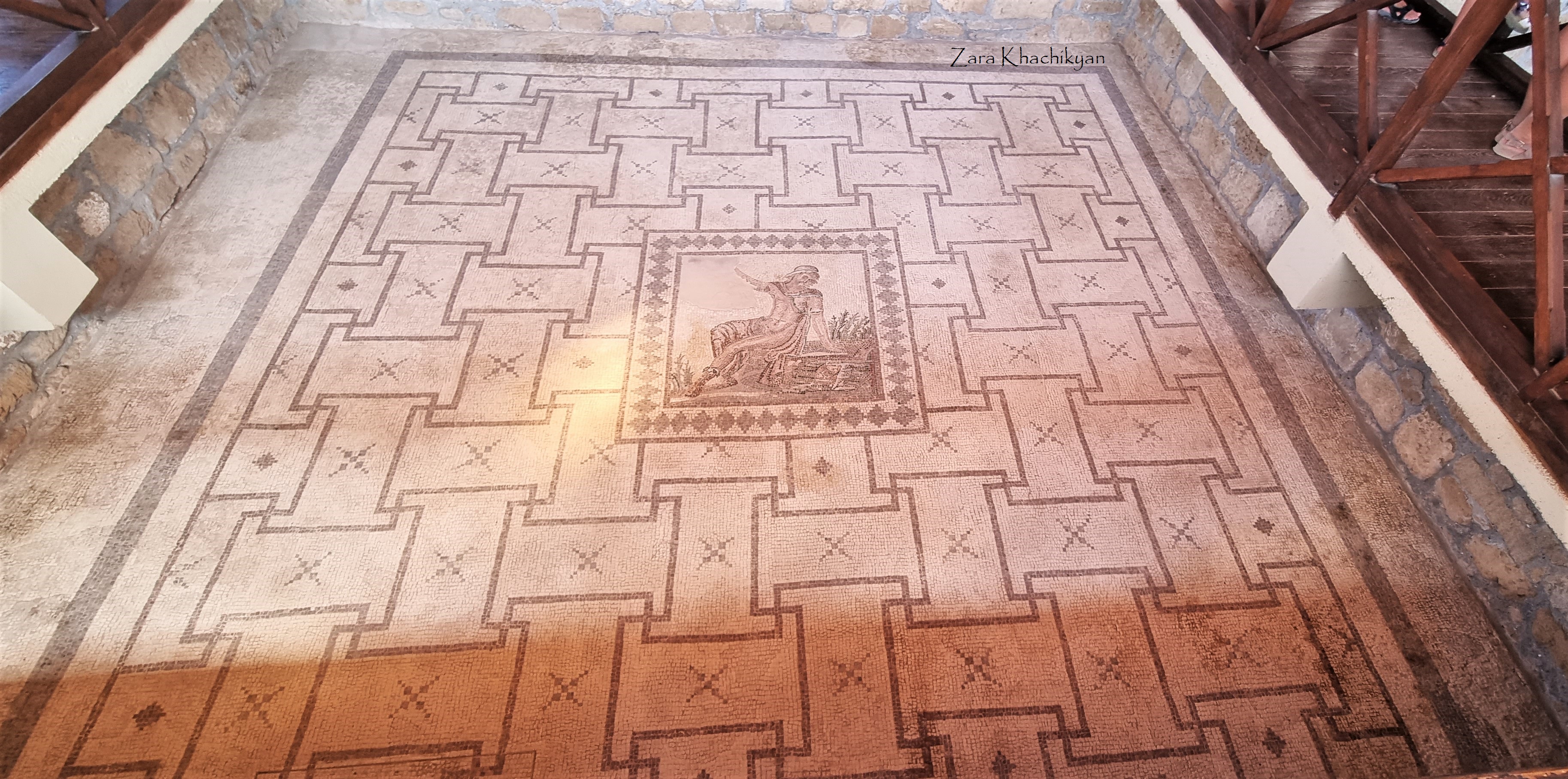
It’s impossible to describe all rooms and all scenes here, as they are “endless”. If telling in few words, other scenes represent the Dionysus and Akme, Ikarios and the shephards, Poseidon and Amymone, Pyramos and Thisbe and the metamorphosis of Daphne. In other rooms you can also see some scenes with Zeus, Narcissus and more mythological heroes, phenomenon and objects. Here are some of them for you.
Not very far from The House of Dionysus you can see the Paphos Lighthouse. It was the first lighthouse to be built in Cyprus by the English, during the last quarter of the 19th century, if to be more exact – in 1888. Yes, it’s not that old as the surrounding buildings, but it is also built it archaeological park of Kato Paphos and it gives a picturesque view to the landscape. This is one of the most beloved places of tourists. Don’t miss your chance to take a picture with it.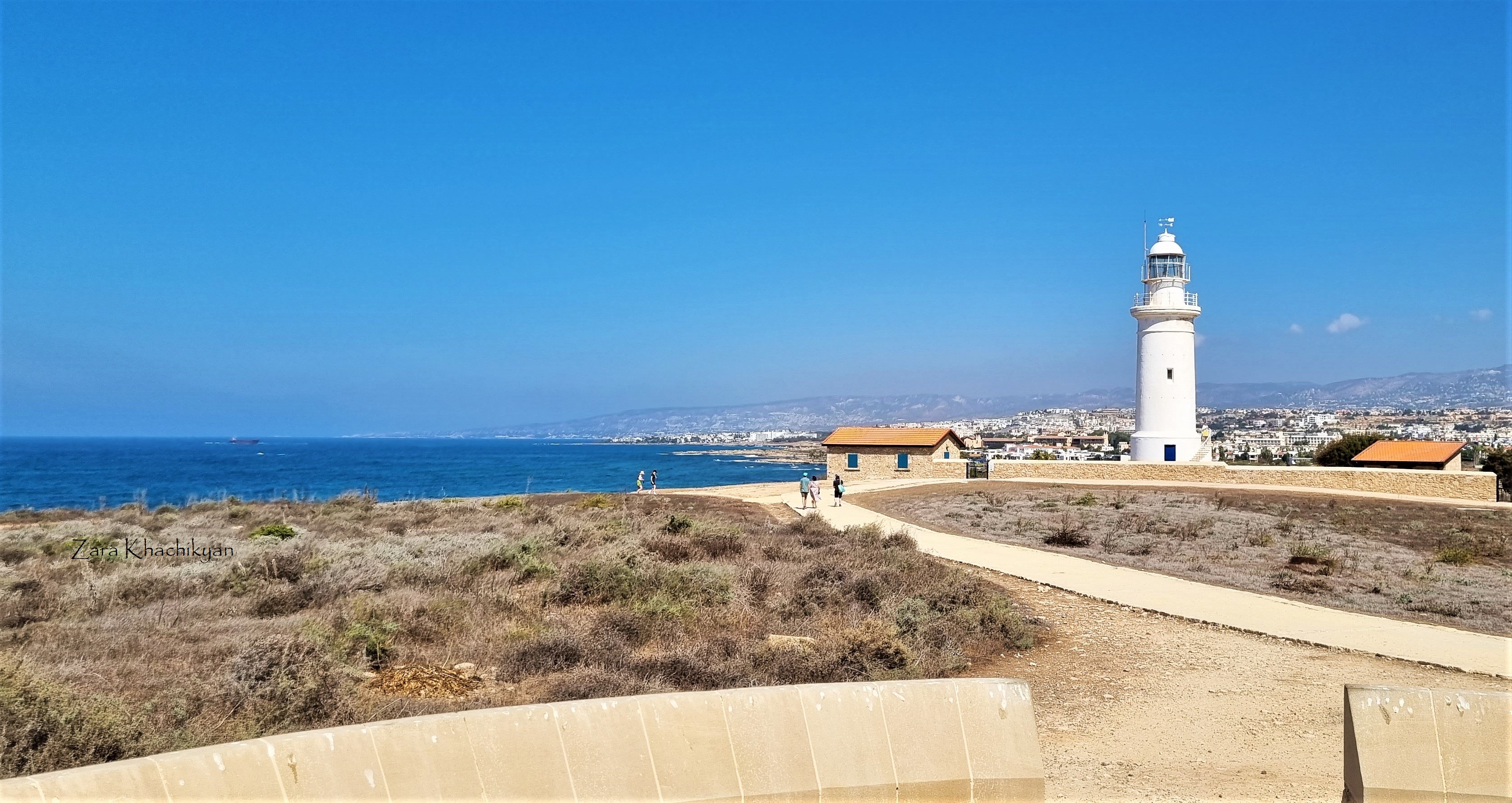
Right behind the Lighthouse you can see another pearl of the park, the majesty of Ancient Odeon. This is one of the most important monuments in Paphos built in 2nd century A.D, and is believed to have been altered by the Romans and used until the 5th century. The amphitheater is made from curved limestone and features twelve rows of stone seating in a half-circle surrounding a stage. It is open for anyone to walk between the rows, sit on the stones and feel yourself as a part of ancient Cyprus.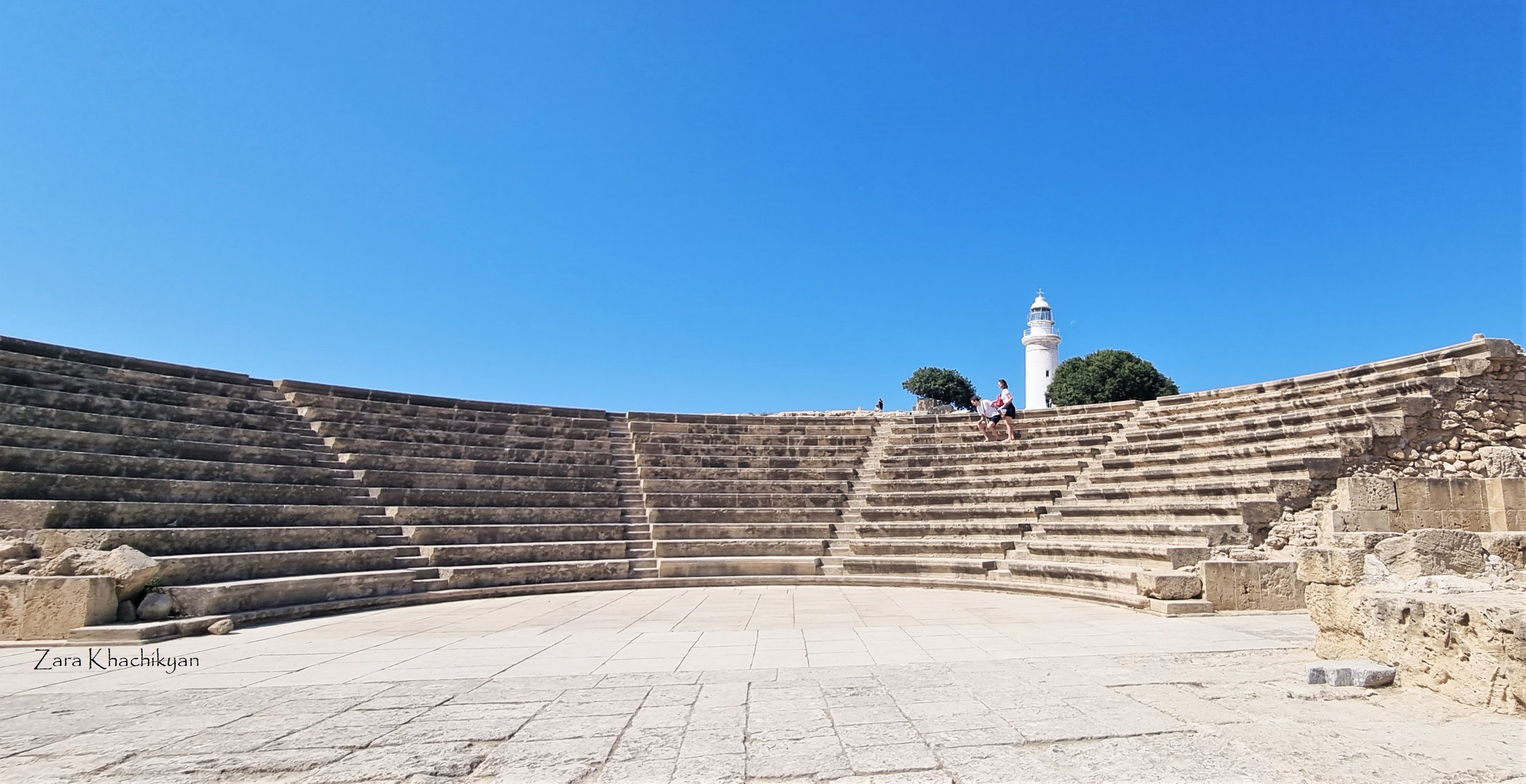
Despite of ruins of other not less important buildings at a time such as Agora and Asclepieion, there is also standing the Saranda Colones Castle. The name translated into English means the Castle of Forty columns and it actually comes from the fact that the original castle was built on the base of 40 granite columns. This was an important Byzantine castle built at the end of the 7th century A.D. to protect the port and the city of Nea Pafos from Arab raids. Later in 13th century the castle was remodeled by the Lusignans. Unfortunately after a powerful earthquake in 1222 the castle was destroyed and never rebuilt. But even today when you walk around, you will feel how huge that was before and still can find a lot of interesting corners to be discovered. Take your time and walk in every corner of this area. 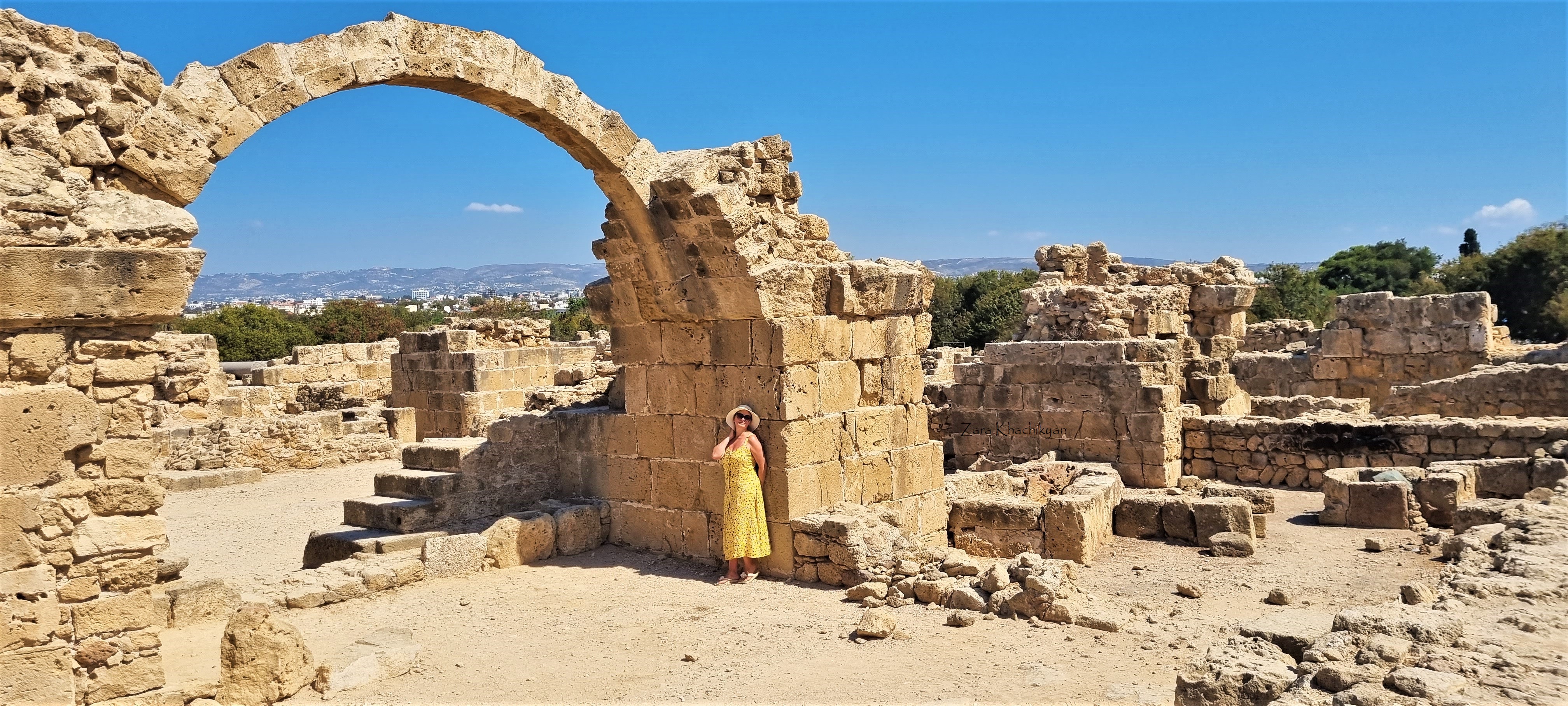
Admission fee 4.50 eur per person (free for children up to the age of 14)
Winter hours (16/9 – 15/4 ) Monday – Sunday: 8.30 – 17.00
Summer hours (16/4 – 15/9) Monday – Sunday: 8.30 – 19.30
But this is not the only castle in Paphos. There is another one, next to the Archaeological park, but in the same area, and it is called simple, as it it, Paphos castle. Just like the Saranta Colones Castle, this one also was originally a Byzantine fort built to protect the harbor, and was rebuilt by the Lusignans in the 13th century. This is a large rectangular castle with a closed courtyard in the middle. Also there are three large rooms in the square Tower on the roof, where the Guard of the Castle lived. 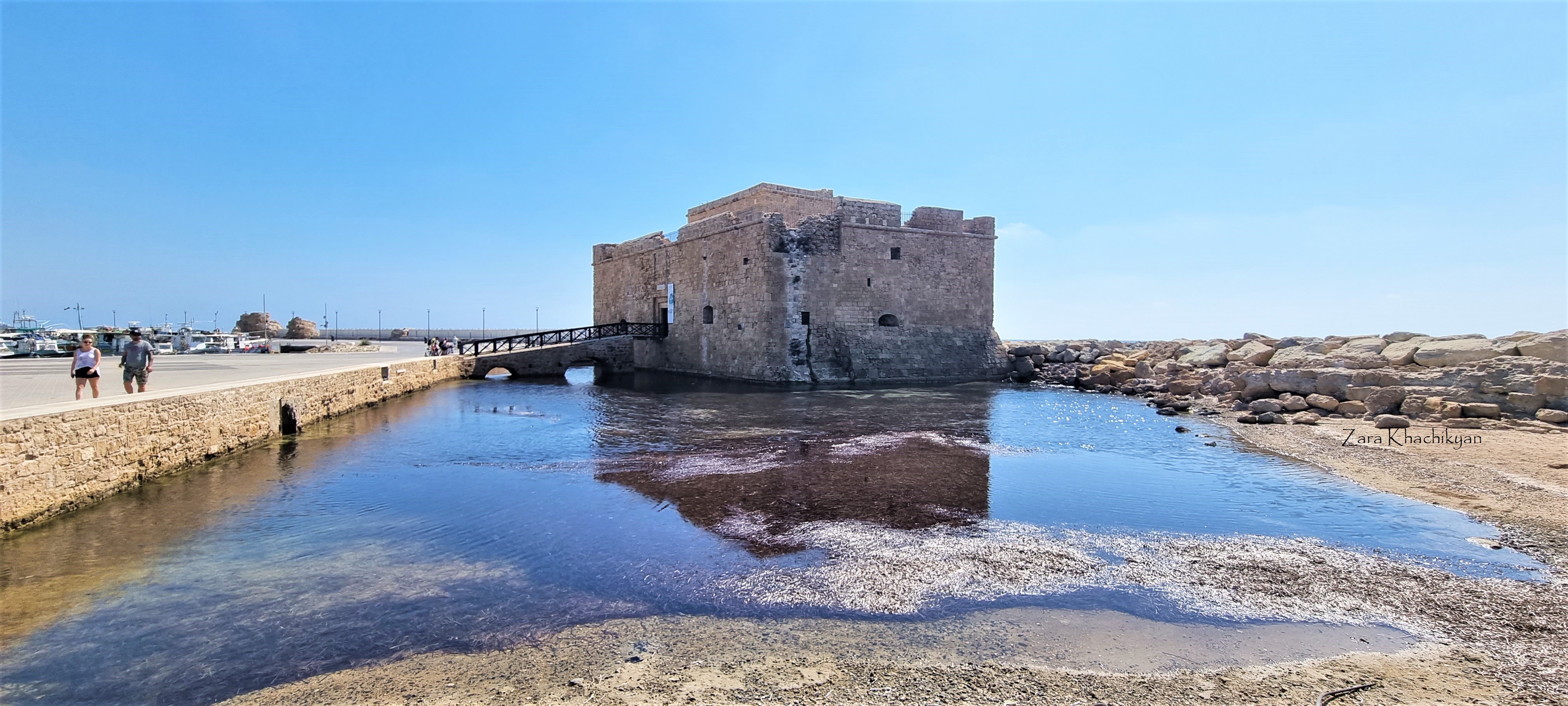
The ground floor of this medieval castle consists of a central hall with small rooms on each of its two long sides, which were used as prison cells during Ottoman Rule. With an admission fee of 2.50 eur you can enter the castle, check the small exposition inside (not sure if it’s a permanent one, but when we were inside, it was something like a modern art exposition) and go to the upper floor to have an awesome view. And as I am always looking for views from the top, I couldn’t miss this opportunity and must say it was really beautiful. From one side you have the Mediterranean Sea with its huge waves and from another side a town of Paphos is standing with its historical and current touristic mood.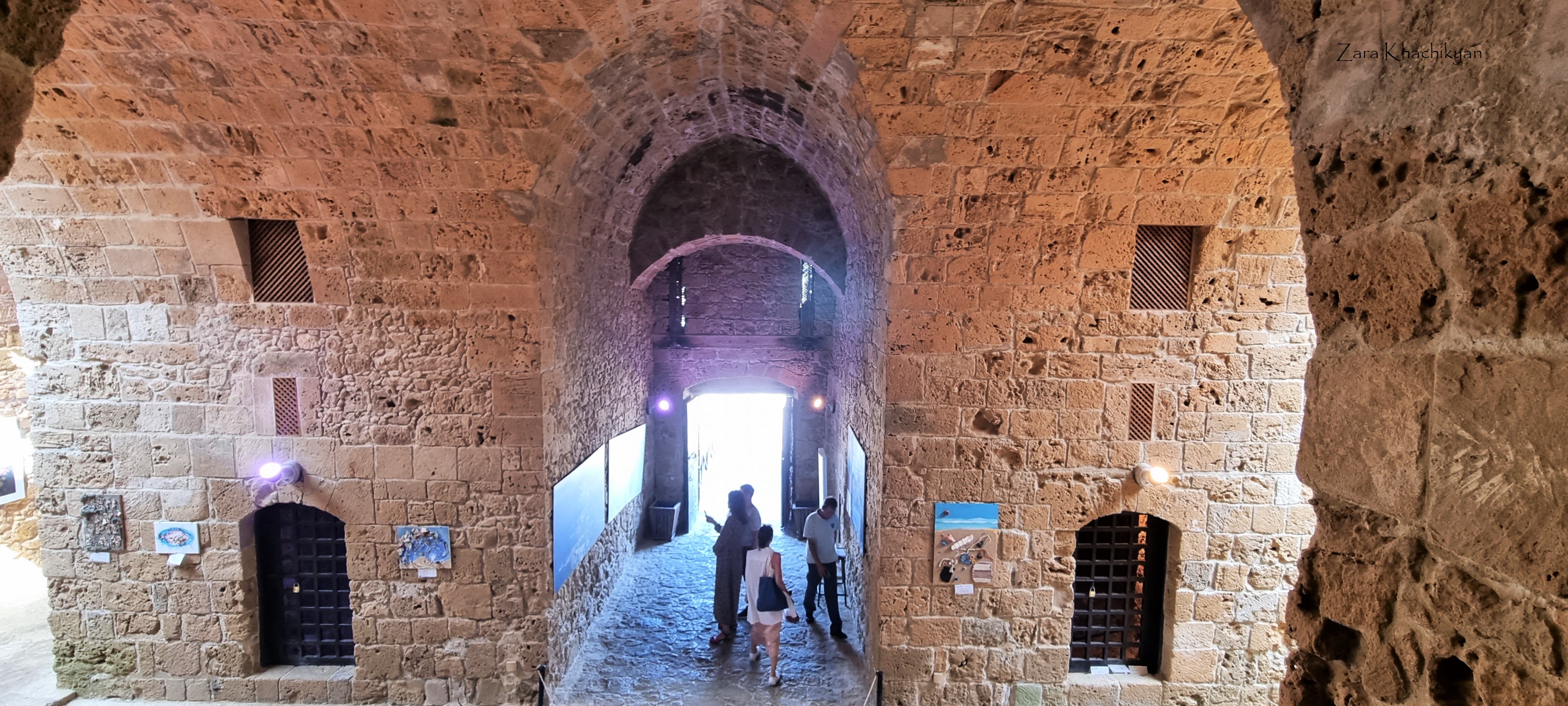
All above mentioned places are included in Archaeological area of Paphos and if you plan to visit them all in one day (which is for sure possible), you may buy a daily entry card issued by The Department of Antiquities, which costs €8,50 (you can buy it at any ticket office of any archaeological site mentioned above). Thus you can pay a euro less than if you bought all tickets separately 🙂 There are also three and seven day entry cards for €17,00/25,00 but in my personal opinion, one day card is fully enough for your visit, if you start your day early, and considering that you can enter each place only once with this card.
If you are an ancient history lover like me, you should definitely come to Paphos and visit all its archaeological areas. We spend only 3 days here, and more than half of each day was spent on a beach. But there are still a lot of awesome paces to be discovered here.
 My Life in Travel
One thought on “Ancient Paphos: Tombs of Kings, Mosaics and Much More”