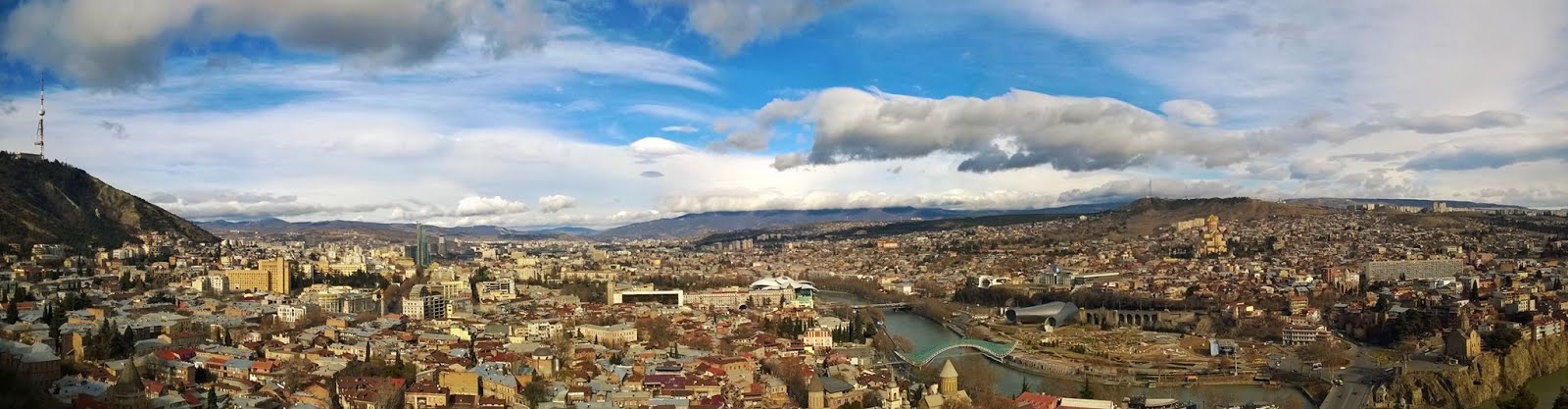
Don’t know where was that hot spring but the city was really warm. People were kind and hospitable. Even that not all of them could easily communicate in Russian or English, but they were willing to help. The city streets and avenues were nicely illuminated after New Year, only snow was missing to feel the spirit of Christmas. But still, it was only a pleasure to walk on large modern or old and narrow streets of the city.
Nearby on Shardeni Street you will find plenty of modern, popular restaurants, open air cafe-bars, trendy night clubs and art galleries. It’s one of the most popular touristic destinations of Tbilisi.
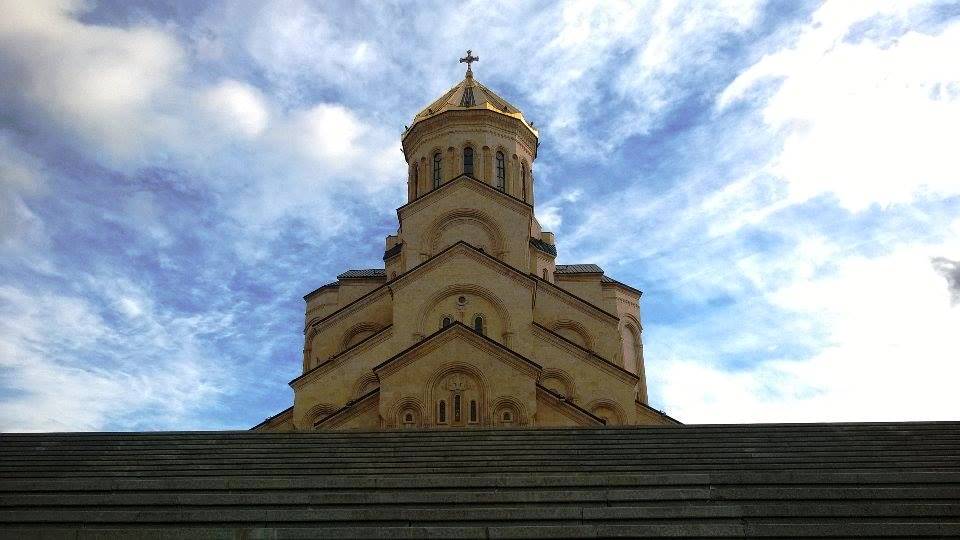
Another most visited place is Rustaveli Avenue, one of the longest avenues of Tbilisi. It begins at Freedom Square and extends about 1.5 kilometers. This is the center of the city, where many of the governmental, cultural and business facilities are located. If you like to walk, explore the city life, to do shopping, this place is just for you.
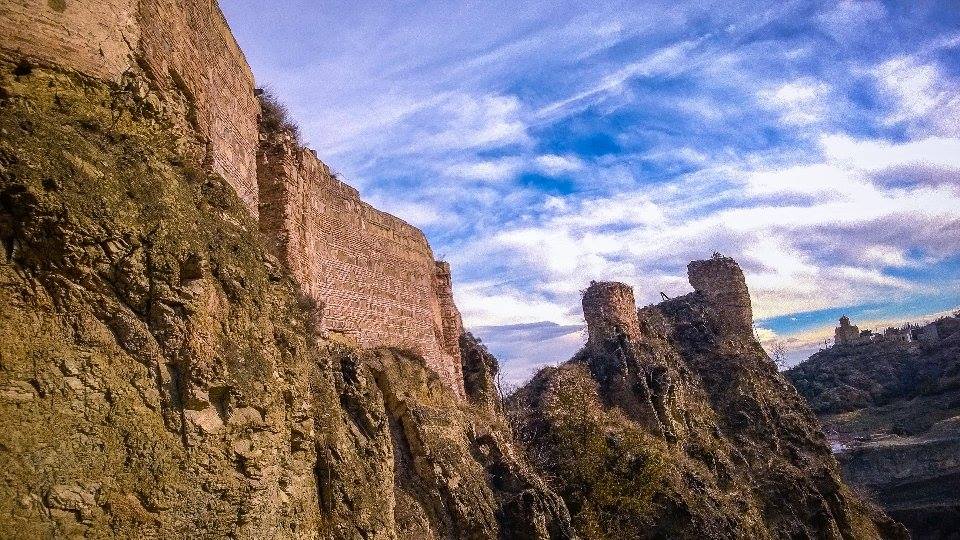
Another place you must visit in Tbilisi is Narikala Fortress, that was constructed for defense purposes in the 4th century. The fortress can be seen from any point within Old Tbilisi and offers panoramic views of the city below. The best way to visit is by aerial tramway, an exciting experience with stunning views of the city, only for 1 Lari (one way fee). You can take the same tramway to go back or can enjoy the way down taking tourist paths with lot of steps going down. Some of them will bring you to the mosque and the baths or right to the entrance of Botanical garden of Tbilisi. This is a lovely park with with scenic waterfall which might be great for a dip on a hot summers’ day. Must be beautiful to visit at summer-fall. After all the dust and noise of the full of people streets, this was the first quiet place to walk and relax.
Just 20 km from Tbilisi, at the confluence of the Mtkvari and Aragvi rivers, the city is located on an ancient trade route, called Mtskheta. The city has a water supply system, markets and stone houses. Mtskheta has been inhabited since before 1,000 BC and was once the capital of the early Kingdom of Iberia (today’s Eastern Georgia). Mtskheta was also the religious center of the country, with a number of major shrines to Georgia’s pagan pantheon. These were later replaced by churches when St. Nino converted the country to Christianity in around 337 AD. Today, the lovely old town with red roofs is a quiet place to stay, walk around, enjoy local wine or chacha.
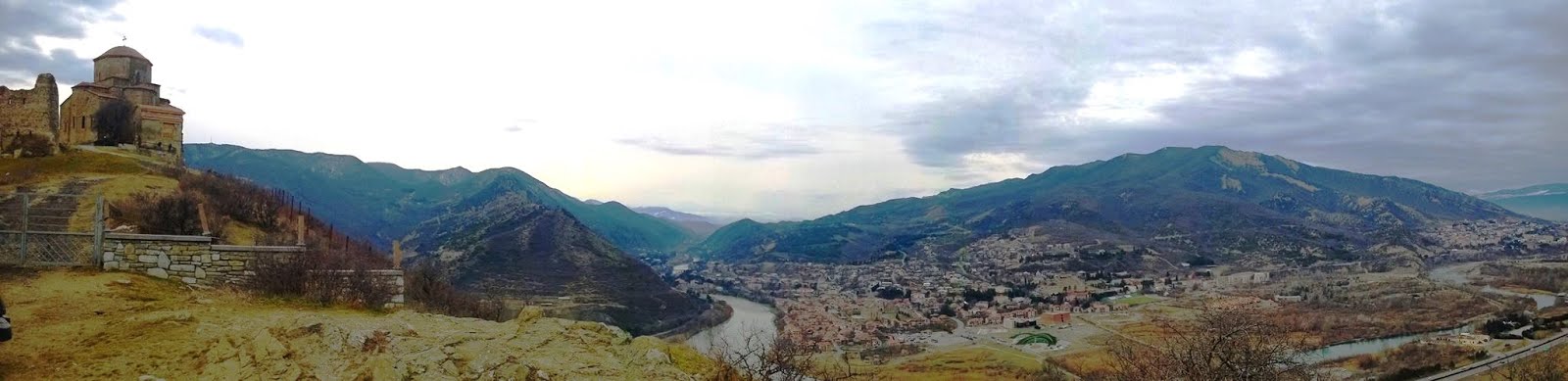 |
| Jvari Monastery and Mtskheta city |
Mtskheta is small enough that it is possible to see the entire town on foot. If you’re already in Mtskheta, then is worth to visit Jvari monastery, which is 5 km from the town center and located on top of a mountain.
The VI century Georgian Orthodox monastery is built on a hill opposite Mtskheta. Shortly after the adoption of Christianity, King Mirian III erected an enormous wooden cross on this site. In the 2nd half of the VI century Guaram, the ruler of Kartli, built a small church beside the Holy Cross. The way to this monastery is passing the forests, which also have small lakes inside. The panoramic view that opens from the top of this hill is breathtaking. You can see the whole Mtskheta, the rivers, mountains in one place. I really recommend to come here, walk on the streets of Mtskheta, feel yourself like in medieval times, try a home made wine (Saperavi is the best) or a glintwain. And of course, to be in a place, where maybe the first cross was erected in Georgia and admire with the view. So beautiful 🙂
Georgia is well known as the home of wine. Georgian wine was and still is the best in post-Soviet culture. Georgia produces wine from more than 500 sorts of grapes. Try any of the wines, each is better than other. The region which is popular for its wine production is Kakheti. Georgia is rich with large valleys, where people grow grapes and one of them is Alazani Valley, that can be easily seen from the city of wine and love, Sighnaghi. It’s about 1,5h drive from Tbilisi. Here everything is lovely, cute and small. Walk around the city, you will feel like in small European towns, with narrow streets and curved balconies.
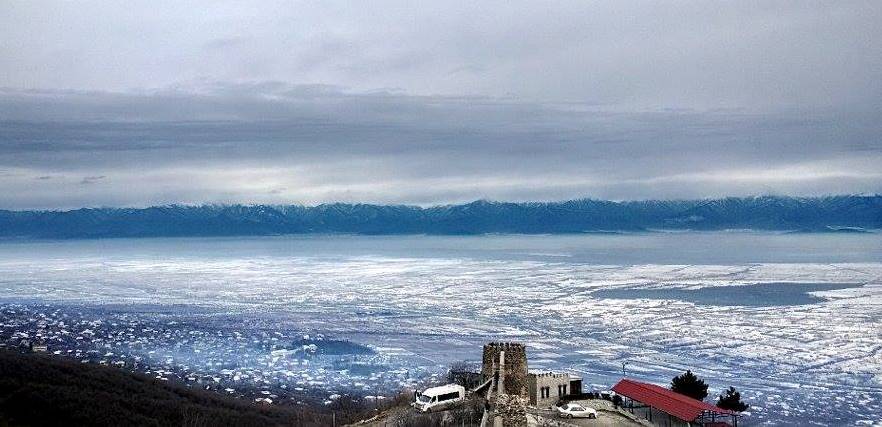
As soon as you leave Sighnaghi, in 2 km you will see the road taking you to Bodbe, to the monastery of st. Nino from 9th century, which is Georgian Orthodox monastery complex and the seat of Bishops of Bodbe. The monastery now functions as a nunnery and is one of the major pilgrimage sites in Georgia, due to its association with st. Nino, the 4th-century female evangelist of Georgians, whose relics are shrined there.
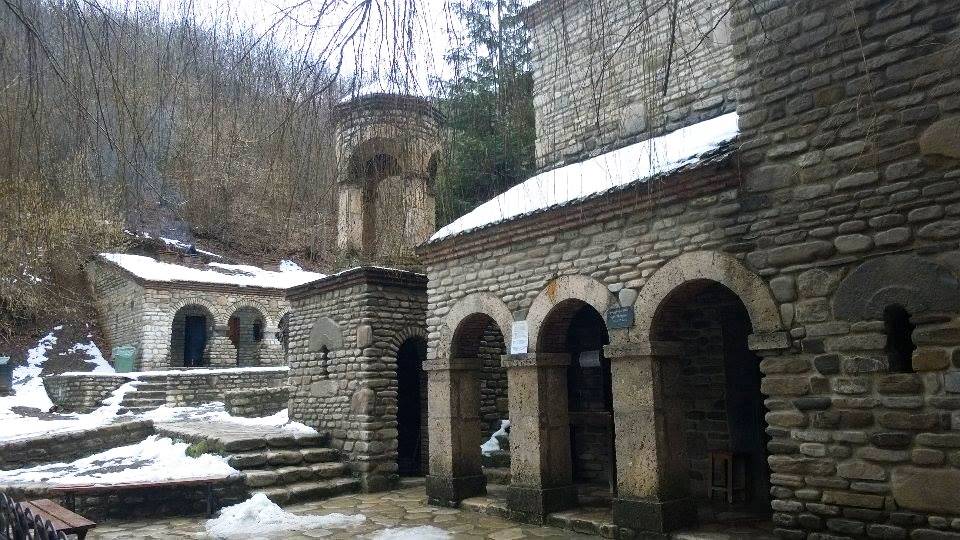
Down the hill from the monastery church, the bell-tower lies the Spring of Saint Nino, where pilgrims or visitors are meant to plunge themselves three times into the frigid water. They say the spring has curative powers, absolves one of sins and is believed to have a healing power. But before taking steps down think twice, you will still need to go up by the same steps, which are held inside the forest. Don’t know if anyone had mood to count these steps, but good to know… They are 777! So be careful 🙂 Anyways, if you still decided to see the Holy Spring of st. Nino, on the way back you can sit and rest on special seats, when you feel tired. I Don’t know if the holy water really has that magic in it, but it gave us forces to take steps back and go back without stops… almost )) In any case, it was good to walk on that path, to feel the smell of trees and wild growing mushrooms after rain, to hear the sound of birds singing. Sometimes it’s so needed to be cut from the city bustle, to be with yourself. And this was just a right place for that. If no rain, I’d prefer to stay here more, sit under the trees and relax…
 My Life in Travel